
Oral Sedation vs IV Sedation: Which Is Right for Your Dental Procedure?
If the idea of a dental appointment makes your stomach drop, you’re in very good company. Dental anxiety is common, valid, and often rooted in real past experiences. Studies and national reports consistently show that a meaningful slice of adults avoid dental care because of fear—often in the ~9–15% range, depending on how it’s measured. And when anxiety leads to avoidance, small problems can quietly become big ones—until the only way forward feels overwhelming.
That’s where sedation dentistry can change the whole story. Instead of bracing yourself through appointments, you can receive care in a calm, controlled, spa-like setting—often with little memory of the procedure. The big question is: oral sedation vs IV sedation—what’s right for you?
In this guide, we’ll break down how each option works, what they feel like, which procedures they’re best for, and how a sedation dentist in South Florida can help you finally get the care you need—comfortably, safely, and without judgment.
Quick Definitions: What “Oral Sedation” and “IV Sedation” Actually Mean
Before comparing them, let’s translate the jargon into human.
Oral Sedation (Oral Conscious Sedation)
Oral sedation means you take a prescribed sedative pill before your visit. Most patients feel deeply relaxed and drowsy, but remain responsive. In dentistry, “conscious sedation” generally means you can still breathe on your own and respond to verbal cues, even though you’re very calm and less aware of what’s happening.
IV Sedation (Intravenous Conscious Sedation)
IV sedation delivers sedative medication through a small IV so the level can be adjusted in real time. Many patients drift into a sleep-like state and remember little to nothing afterward. IV sedation is commonly used to help patients receive dental treatment safely and comfortably, especially when anxiety is severe or treatment is extensive.
Both options are forms of sedation dentistry. Both are paired with local anesthetic (“numbing”) so the work itself is painless—sedation mainly helps your mind and body stay calm through the process.
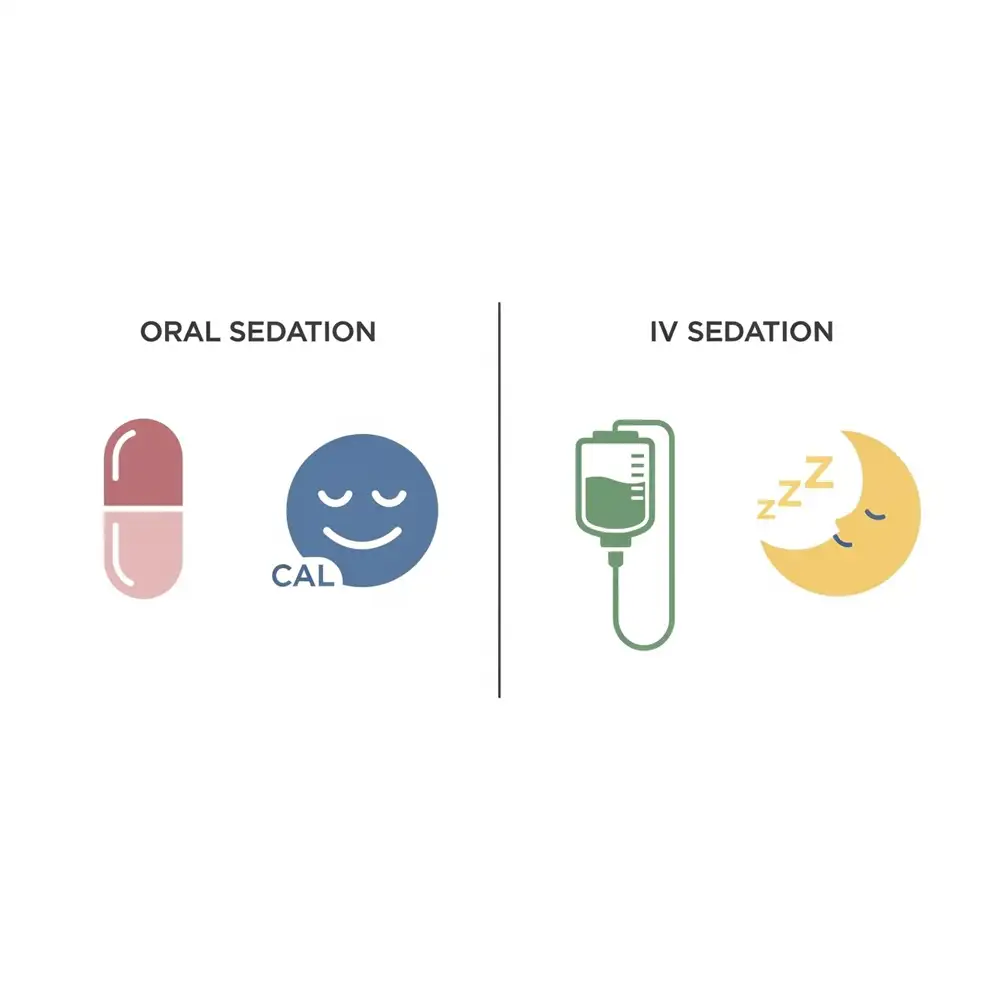
Oral Sedation vs IV Sedation: The Differences That Matter (Most)
Here’s what patients actually care about—control, comfort, memory, and recovery.
1) Speed & Predictability
Oral sedation: Takes time to kick in and can vary more from person to person (metabolism, anxiety level, empty stomach, etc.).
IV sedation: Works quickly and is more predictable because it’s delivered directly and can be fine-tuned during treatment.
2) Level of Relaxation (and “Sleep Dentistry” Feel)
Oral sedation: You’re usually awake but very drowsy—think “heavy eyelids, calm brain.”
IV sedation: Often feels like “time travel.” Many patients doze through the visit and wake up surprised it’s over. For patients wanting a deeper, more detached experience, IV sedation dentistry is usually the favorite.
3) Memory of the Procedure
Oral sedation: Many patients have partial or fuzzy memory.
IV sedation: Typically much less memory, sometimes none—especially for longer procedures.
4) Ability to Adjust Mid-Procedure
Oral sedation: Not adjustable once taken.
IV sedation: Adjustable throughout the appointment, which is a huge advantage for longer or more complex care.
5) Recovery & Aftercare
Oral sedation: You’ll need a driver and may feel groggy for several hours.
IV sedation: You’ll also need an escort and a short monitored recovery period; many patients feel drowsy for a few hours and are back to normal by the next day, depending on the plan and individual response.
Which One Is Right for Your Dental Procedure?
A good sedation plan is personal. A great one is personal and practical.
Oral Sedation Is Often Ideal If…
Your anxiety is moderate (you’re nervous, but not panicking).
You want to stay more “present,” just calmer.
Your procedure is medium-length (fillings, crowns, simpler extractions).
You’re comfortable taking medication beforehand and following prep instructions.
Oral sedation dentistry is a strong option when you want meaningful relaxation without the deeper, more sleep-like experience of IV sedation.
IV Sedation Is Often Ideal If…
You have severe dental anxiety or past trauma.
You’ve avoided care for years and feel overwhelmed.
You have a strong gag reflex, jaw discomfort, or trouble sitting still.
You need extensive work and want to combine procedures into fewer visits.
You want the “spa” version of dentistry: deeply relaxed, little-to-no memory.
This is where IV sedation dentistry shines. It’s commonly chosen by patients who want to “turn down the volume” on the entire experience.
At Sedation Dental Spa of South Florida, we’re especially known for helping anxious patients in a calm, judgment-free environment—because you shouldn’t have to relive fear to get healthy again.
Comfort + Efficiency: Why IV Sedation Is a Game-Changer for Bigger Treatment Plans
If you need multiple crowns, fillings, extractions, or a full-mouth “catch-up” plan, IV sedation can be more than comfort—it can be strategy.
Because IV sedation is adjustable and can keep you relaxed for longer periods, it often allows your dentist to complete more dentistry in one appointment. That means fewer visits, fewer days of dread, and faster relief.
This is the heart of our promise: Fix years of neglect in one simple, painless, restful visit. That’s not hype—it’s what well-planned sedation dentistry makes possible for the right candidate.
Safety First: What Makes Sedation Dentistry “Safe” (and What to Look For)
Sedation safety isn’t about vibes—it’s about standards, training, screening, and monitoring.
Authoritative guidelines emphasize continuous patient monitoring and appropriate equipment, especially as sedation gets deeper. The American Dental Association also provides guidance for the use of sedation and anesthesia by dentists and notes the importance of qualified providers, proper facilities, and emergency readiness.
In Florida, dentists who provide moderate sedation must meet training and competency requirements to obtain the proper permitting. Florida Board of Dentistry+1
Practical takeaway: choose a sedation dentist who (1) reviews your medical history thoroughly, (2) explains your sedation level clearly, and (3) monitors you continuously throughout treatment.
What to Expect at Sedation Dental Spa (Oral or IV)
A good sedation visit should feel calm from the very first conversation.
Judgment-Free Consultation: We listen first—your fears, past experiences, and goals.
Sedation Planning: Oral sedation vs IV sedation is discussed based on your health history and procedure needs.
Simple Prep: You’ll get clear instructions (fasting rules if needed, medication guidance, and arranging a ride).
Treatment Day (Spa-Like Comfort): Gentle administration, calm environment, and continuous monitoring.
Recovery: You wake up/rest comfortably while we ensure you’re stable and ready to go home with your escort.
Follow-Up: We check healing and momentum—because progress builds confidence.
Frequently Asked Questions (Oral Sedation vs IV Sedation)
Is oral sedation safer than IV sedation?
Neither is “automatically” safer—safety depends on proper screening, correct dosing, qualified providers, and appropriate monitoring. Dental sedation guidelines emphasize training and monitoring standards.
Will I be asleep with oral sedation?
Usually no. Most patients are very drowsy and relaxed but can respond. Conscious sedation generally means you maintain protective reflexes and can respond to verbal cues.
Will I be completely unconscious with IV sedation?
IV sedation commonly produces a deeper, sleep-like state, but many patients are still technically responsive if stimulated. Your provider will choose the safest level for your needs and procedure.
Do I need someone to drive me home?
Yes—both oral sedation and IV sedation typically require a responsible adult escort because drowsiness can linger.
What procedures are best with IV sedation?
IV sedation dentistry is popular for longer appointments, multiple procedures in one visit, complex extractions, and for patients with severe dental anxiety or phobia.
How do I choose between oral sedation vs IV sedation?
Think in two questions: (1) How intense is your anxiety? (2) How long/complex is your treatment? Moderate anxiety + shorter procedures often fit oral sedation. Severe anxiety, gag reflex issues, or extensive treatment often fit IV sedation dentistry.
Alternatives in Other Cities
While Sedation Dental Spa provides excellent care for residents near Miramar and Lighthouse Point, here are some notable alternatives in other cities:
- Luxe Dental – Dentist in Lauderhill
- Beach Smile – Dentist in North Miami
- Family Dentistry Naples – Dentist in Naples
- Family Cosmetic Dentistry – Dentist in Weston
- Tooth Fairy Workshop – Dentist in Hollywood
- All Smiles Dentistry – Dentist in Miami Gardens
- Sedation Dental Spa – Dentist in Miramar
- Miami Dental Group
- BDC Dental Care – Dentist in Brickell
- All Dental Group – Dentist in Miami Lakes
- Dental Boost – Dentist in Hialeah
Each of these clinics has been well-reviewed by locals and may serve as reliable alternatives when you’re out of town.
If fear has kept you away, you don’t need more willpower—you need a plan that respects your nervous system. Oral sedation and IV sedation are both powerful tools in sedation dentistry, and the best option is the one that helps you complete treatment calmly, safely, and without shame.
Many patients tell us the same thing afterward: “I wish I’d done this years ago.” Your smile—and your peace of mind—are worth it.
Ready to get the dental care you need in complete comfort? Contact Sedation Dental Spa of South Florida to schedule a judgment-free consultation. Call (954) 433-4300 or request an appointment online. We serve patients throughout South Florida, including Lighthouse Point, Miramar, Pompano Beach, and surrounding areas.
18431 Miramar Pkwy, Miramar 33029
(954) 433-4300
2028 East Sample Road, Lighthouse Point 33064
(954) 946-8484